
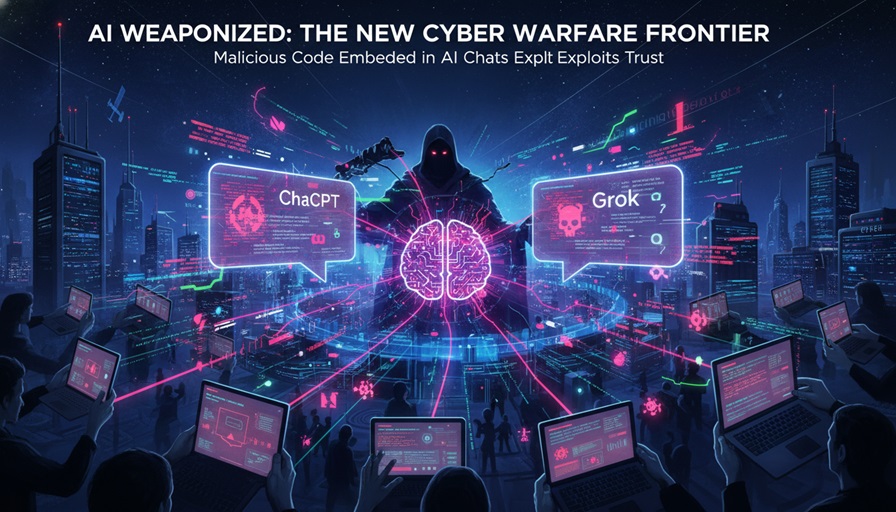
Cybercriminals are stepping into a new era, using AI tools such as ChatGPT and xAI’s Grok to build and refine next-generation malware. While AI has empowered developers, businesses, and even students, it is also giving attackers faster ways to write malicious code, automate phishing operations, and bypass traditional security defenses. This shift is reshaping the cyber threat landscape and pushing security teams to evolve quickly.
Criminals are no longer relying solely on coding expertise — they are now leveraging AI models to generate, test, and improve malware, making attacks faster, more scalable, and harder to detect.
How Hackers Are Using AI Behind the Scenes
Security researchers have observed dark-web discussions where attackers share techniques for using AI models to rewrite malware in cleaner, more obfuscated formats. Although platforms like ChatGPT enforce safety restrictions, cybercriminals often use indirect prompts, jailbreaks, and conversation-based manipulation to bypass filters.
Many attackers focus on transforming simple scripts into more advanced threats. They combine AI-generated code with manual modifications, resulting in malware that blends into normal system activity. This approach accelerates development cycles and reduces the need for deep programming skills.
Why AI-Enhanced Malware Is Harder to Detect
AI-generated malware tends to be clean, structured, and optimized. As a result, traditional antivirus tools struggle to detect it because they rely on patterns, signatures, and known malicious behaviors. Since AI tools can rewrite the same malicious function in countless variations, signature-based detection becomes far less effective.
Even worse, attackers combine this with social engineering powered by AI language models, producing phishing emails and messages that seem more human and more convincing than ever before.
Real-World Impact on Android and Mobile Ecosystems
Recent malicious Android projects demonstrate how criminals blend AI-assisted code with mobile attack strategies. These threats often target app permissions, SMS interception, and banking credentials. As mobile usage continues to rise globally, Android remains a major target.
To protect users, security researchers are recommending stronger scanning, better permission controls, and continuous monitoring — all of which align with ongoing efforts across the Cybersecurity & Privacy category on Techaloop.
AI Models Are Being Reverse-Engineered for Malware Insights
Many threat actors are experimenting with the internal behaviors of AI models such as ChatGPT and Grok. They test different prompt styles, analyze the model’s responses, and refine their methods until the AI produces the outcome they want. Because of this iterative process, the malware they create becomes more dynamic and more resilient.
External cybersecurity watchdogs including Cybersecurity Dive, Krebs on Security, Dark Reading, and BleepingComputer have published multiple analyses confirming how quickly criminals are learning to adapt.
What This Means for the Future of Cybersecurity
The rise of AI-powered cyber threats is pushing organizations to rethink their defenses. Companies now need AI-assisted security solutions that can detect anomalies rather than rely only on signatures. The shift is similar to what we have seen in Future Tech, IoT, and even Space Tech, where automation and intelligence are driving rapid change.
Moving forward, defenders must embrace AI as aggressively as attackers do. Security operations, threat analysis, and automated detection frameworks will need to evolve continuously to stay ahead of this trend.
How Users and Organizations Can Stay Protected
- Update devices and applications frequently to patch vulnerabilities.
- Use reputable antivirus solutions with behavioral analysis capabilities.
- Be cautious of unexpected messages, links, or app permissions.
- Monitor cybersecurity updates from authoritative sources such as WIRED Security, Ars Technica Security, and TechRadar Cybersecurity.
As AI continues to mature, both innovation and risk will grow. However, with proper awareness and better defensive technologies, organizations and individuals can stay ahead of the evolving threat landscape.