

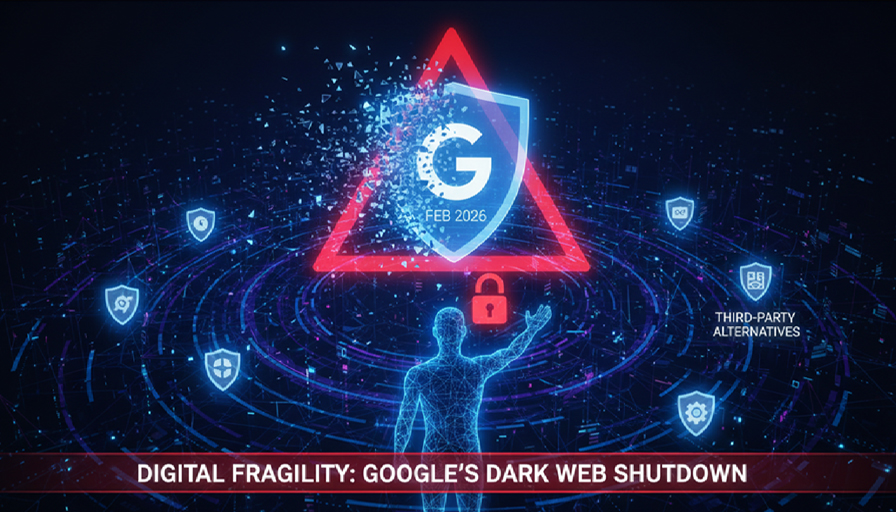
Google is set to discontinue its free dark web monitoring tool by February 2026, prompting users to seek alternative third-party services to maintain continuous identity protection.
Google Quietly Ends a Key Identity Protection Feature
Google has confirmed plans to discontinue its free dark web monitoring tool, a service that helped users detect whether their personal information had been exposed online. The shutdown is scheduled for February 2026, giving users a limited window to prepare for the change.
For many users, this tool served as an early-warning system against identity theft. It offered alerts when sensitive data appeared in dark web marketplaces or underground forums, allowing people to act quickly before real damage occurred.
What the Dark Web Monitoring Tool Actually Did
The dark web report tool scanned illicit online sources for compromised personal data, including email addresses, passwords, and other identifiers. When a match appeared, users received notifications prompting immediate security actions.
As part of broader cybersecurity and privacy protections, the tool helped users reset passwords, lock down accounts, and reduce the risk of financial fraud. In today’s threat landscape, early detection remains one of the most effective defenses.
Why Google May Be Discontinuing the Service
Google has not provided detailed reasoning for the decision. However, maintaining dark web monitoring at scale requires constant crawling, analysis, and verification, which can be costly and operationally complex.
Another possibility is a strategic shift toward premium security offerings. Google may also be reassessing how identity protection fits within its broader ecosystem of consumer products and subscriptions.
What Users Should Do Before 2026
The planned shutdown means users must reassess how they protect their digital identities. Fortunately, the timeline allows ample opportunity to transition to alternative services.
Several third-party providers specialize in dark web surveillance, identity theft protection, and recovery assistance. Many of these services offer deeper scanning, insurance coverage, and dedicated response teams. While they often require subscriptions, they may provide stronger protection than general-purpose tools.
Users should also strengthen their defenses by enabling two-factor authentication, rotating passwords regularly, and remaining cautious of phishing attempts—a growing threat within the tech news landscape.
A Reminder That Digital Security Is a Shared Responsibility
Google’s decision underscores an important reality: digital security cannot rely on a single provider or tool. While platforms can offer safeguards, individuals must remain proactive in protecting their online identities.
As cyber threats continue to evolve, experts from organizations like CISA and Have I Been Pwned consistently emphasize layered security strategies.
Final Thoughts
With the free dark web monitoring tool set to disappear in 2026, users should take action now rather than wait. Transitioning early allows time to compare services, improve security habits, and ensure continuous protection.
Although Google is closing this chapter, the broader message is clear: identity protection is an ongoing process, and staying ahead of threats requires awareness, adaptability, and the right tools.
Source: Google Search