

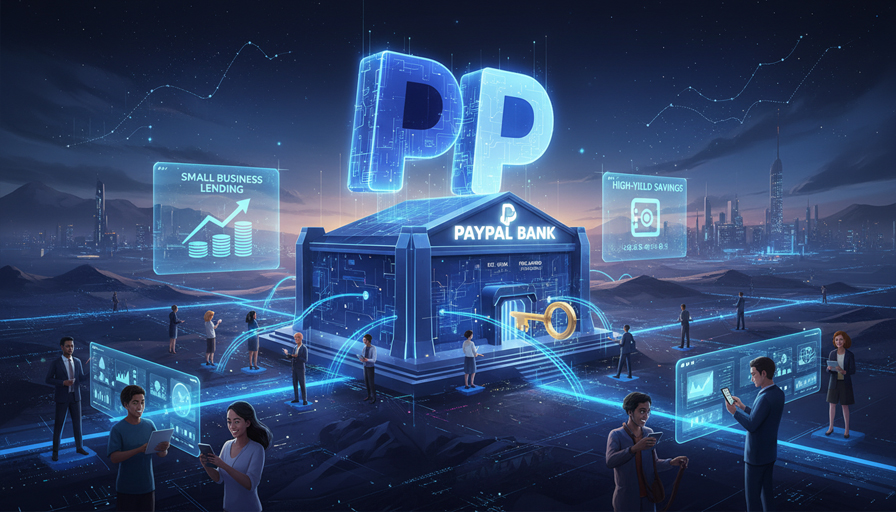
PayPal is applying for an industrial bank charter in Utah to launch “PayPal Bank.” The move would expand small business lending, enable interest-bearing savings accounts, and deepen PayPal’s competition with traditional banks.
PayPal is taking a decisive step toward becoming a full-fledged financial institution. The fintech giant has officially applied for an industrial bank charter in Utah, with approvals required from both state regulators and the Federal Deposit Insurance Corporation (FDIC). If granted, the move would lead to the launch of PayPal Bank, significantly expanding PayPal’s ability to offer lending and savings products directly to users.
This development positions PayPal more aggressively within the FinTech and Enterprise Tech ecosystems, where digital-first financial services are increasingly challenging legacy banks.
Why PayPal Wants an Industrial Bank Charter
An industrial bank charter would allow PayPal to accept customer deposits directly, rather than relying on partner banks. As a result, PayPal could lower its cost of capital and gain greater control over its lending operations. This is especially important for expanding PayPal small business lending, an area where demand continues to surge.
For years, PayPal has supported merchants through products like Working Capital and Business Loans. However, operating without a banking license limited how efficiently it could scale. With PayPal Bank, lending decisions could become faster, more flexible, and better tailored to small and mid-sized businesses that often struggle with traditional bank requirements.
PayPal Bank and Interest-Bearing Savings Accounts
Beyond lending, PayPal Bank plans to introduce interest-bearing savings accounts. This would mark a major shift for the platform. Instead of acting solely as a payments and wallet service, PayPal would become a place where users can store, grow, and manage money within one ecosystem.
Importantly, deposits would be FDIC-insured, increasing trust and encouraging users to keep larger balances on the platform. This strategy mirrors broader trends in digital banking transformation, where convenience and integration drive long-term customer loyalty.
How This Affects Small Businesses
For small businesses, the implications are significant. Easier access to capital can help entrepreneurs manage cash flow, expand operations, and survive economic downturns. Since PayPal already has deep transaction-level insight into merchant activity, its lending models could be more responsive than those used by traditional banks.
According to the FDIC, industrial banks remain subject to strict safety and soundness standards. This means PayPal Bank would still operate within a regulated framework, offering reassurance to both businesses and consumers.
Regulatory Hurdles and Competitive Pressure
That said, approval is far from guaranteed. The FDIC review process is rigorous, focusing on capital adequacy, risk management, and consumer protection. Regulators will closely examine whether PayPal can safely operate a bank at scale.
Still, PayPal is not alone. Other fintech leaders, including Block (formerly Square), have already pursued similar charters. As noted by the U.S. Federal Reserve, this trend reflects fintech’s growing ambition to own more of the financial stack.
What PayPal Bank Means for the Future of FinTech
If approved, PayPal Bank could accelerate the convergence of fintech platforms and traditional banking. It would intensify competition, push legacy banks to modernize faster, and give businesses more flexible financial options.
Ultimately, PayPal’s bank charter application represents more than a product expansion. It signals a long-term strategy to become a comprehensive financial hub. As fintech and banking continue to merge, PayPal Bank could redefine how businesses and consumers access modern financial services.