

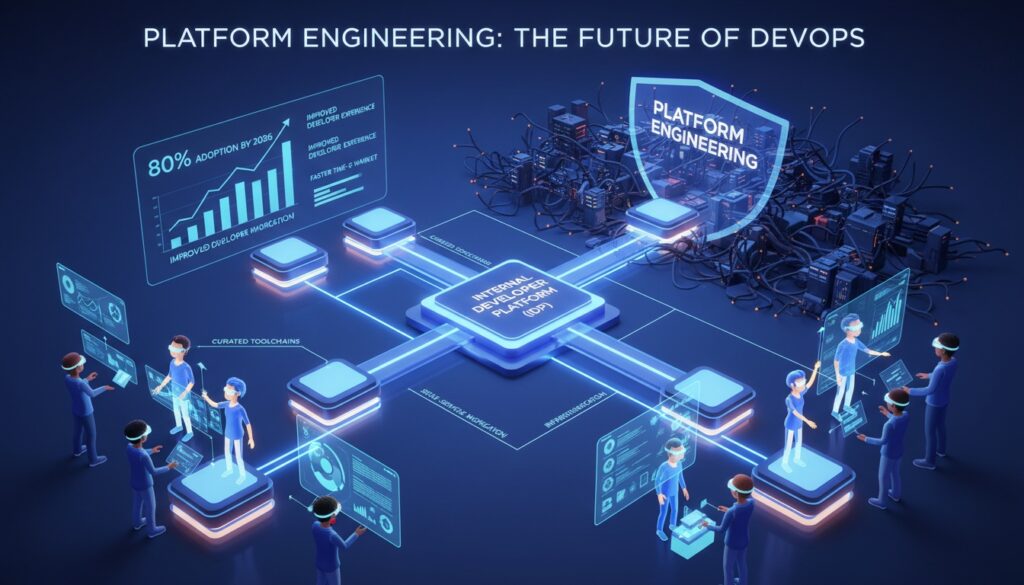
By 2026, 80% of development teams are expected to adopt Platform Engineering and Internal Developer Platforms (IDPs) to reduce complexity, improve developer experience, and accelerate software delivery.
The software development landscape is undergoing a major structural shift. Platform Engineering is rapidly emerging as the backbone of modern DevOps, with analysts predicting that by 2026, nearly 80% of development teams will rely on Internal Developer Platforms (IDPs). This transition reflects a growing need to manage operational complexity while enabling faster, more reliable innovation.
As organizations scale cloud-native systems, traditional DevOps models often struggle under the weight of tooling sprawl, microservices, and infrastructure complexity. Platform Engineering directly addresses these challenges by rethinking how development teams interact with infrastructure, security, and deployment workflows.
What Platform Engineering Means for Modern DevOps
Platform Engineering focuses on building shared platforms that provide developers with self-service capabilities. Instead of each team managing its own infrastructure and pipelines, a dedicated platform team creates a standardized “paved road” for development.
This approach abstracts away operational complexity. As a result, developers can focus on writing and shipping code, while the platform enforces best practices around security, reliability, and compliance.
Why Internal Developer Platforms Are Gaining Traction
Internal Developer Platforms sit at the heart of Platform Engineering. These platforms unify CI/CD pipelines, infrastructure provisioning, observability, and security tooling behind a single interface.
Today’s developers often face excessive cognitive load. They must understand cloud services, deployment pipelines, security policies, and runtime environments. IDPs reduce this burden by offering consistent workflows and clear defaults, which improves productivity and reduces burnout.
Key Benefits of Platform Engineering Adoption
Organizations that invest in Platform Engineering unlock several strategic advantages:
- Improved Developer Experience: Self-service tools and faster feedback loops streamline daily workflows.
- Faster Software Delivery: Automated provisioning and standardized pipelines reduce lead times.
- Stronger Governance: Platforms embed security, compliance, and architectural standards by design.
- Lower Operational Costs: Centralized platforms reduce duplication and infrastructure waste.
Challenges of Building Internal Developer Platforms
Despite its benefits, Platform Engineering requires careful execution. Building an effective IDP demands upfront investment, cross-functional expertise, and ongoing platform maintenance.
Additionally, organizations must manage cultural change. Developers accustomed to full autonomy may resist standardization, while platform teams must balance flexibility with guardrails. Choosing open, extensible technologies is also critical to avoid vendor lock-in.
Why Platform Engineering Is a Strategic Necessity
As software delivery becomes central to business competitiveness, Platform Engineering is no longer optional. It provides a scalable way to support growing engineering teams while maintaining speed, quality, and security.
By 2026, organizations that fail to adopt Internal Developer Platforms risk falling behind more agile competitors. Platform Engineering offers a proven path to sustainable DevOps, faster innovation, and a healthier developer experience.
Source: Gartner, Platform Engineering Community, Kubernetes