
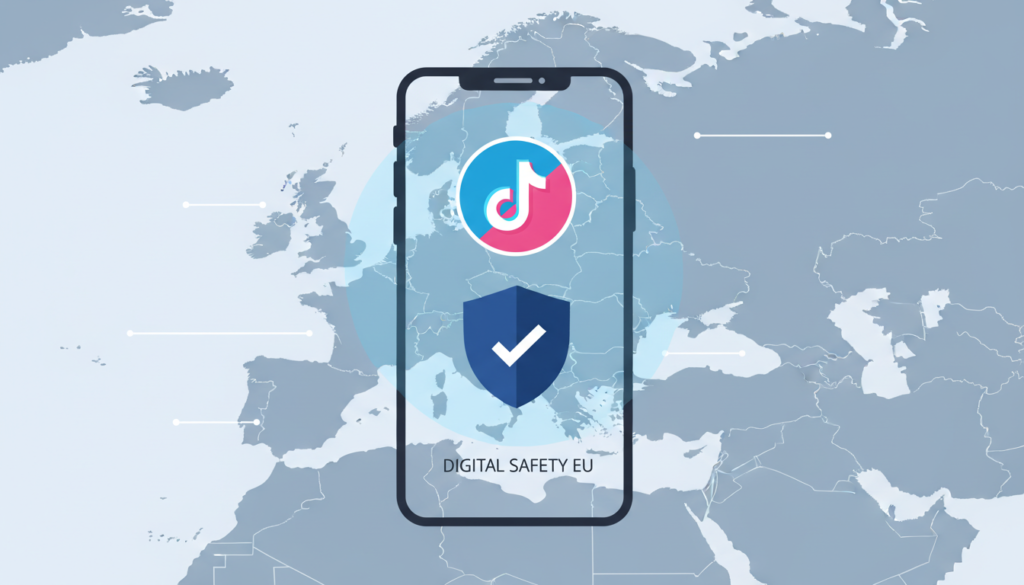
TikTok is enhancing child safety across Europe by deploying a hybrid age verification system. This initiative combines AI prediction with human moderation to identify and remove under-13 users. Consequently, the platform moves to align with strict EU digital regulations.
TikTok is launching a major initiative to enhance child safety. Specifically, the platform is rolling out advanced TikTok age verification Europe protocols. Consequently, this move creates a more secure online space. Its primary goal involves identifying and removing users under the age of 13.
The app is deploying a multi-layered approach. It merges age-prediction technology with human moderation. Furthermore, this strategy detects underage accounts effectively. It highlights a commitment within Tech Policy and Law to tackle minor access issues. Therefore, regulators welcome this robust response to age-restricted access.
This update arrives at a critical moment. Social media giants face scrutiny regarding digital impacts on children. Moreover, European Union lawmakers are demanding stricter safety measures. For instance, the Digital Services Act (DSA) imposes obligations for user safety. TikTok’s adoption of TikTok age verification Europe signals compliance with these frameworks. Additionally, it demonstrates corporate responsibility toward its young user base.
The system integrates Artificial Intelligence with human oversight. Initially, AI uses anonymized data to flag suspected minor accounts. Subsequently, trained moderators review these flags. This layered process minimizes incorrect detections. Furthermore, it maximizes efficiency against underage access. Although specific AI details remain private, standards usually involve analyzing content interactions.
The impact of these measures will be significant. Underage users face immediate enforcement. Consequently, this could lead to account suspensions. Parents gain reassurance that TikTok is filtering out young children. From a Consumer Tech perspective, this sets a benchmark. Thus, other platforms may strengthen their systems soon, as noted by industry analysts at TechCrunch.
However, implementing this technology has hurdles. AI accuracy varies regarding appearance nuances. Additionally, privacy concerns exist around verification data. Critics argue that persistent users might bypass measures. Therefore, continuous adaptation is necessary for TikTok age verification Europe to succeed.
Ultimately, this focus marks a pivotal moment for digital safety. It highlights the industry’s role in cultivating secure environments. No system is entirely foolproof. Nevertheless, this framework is a significant step forward. It aids the collective effort to protect children, a sentiment echoed by The Hindu.