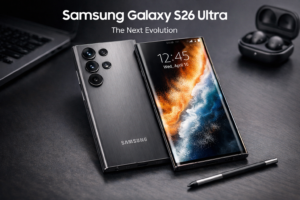

This analysis explores the hardware evolution of Samsung’s flagship series, detailing the specific camera upgrades from the S23 Ultra through the anticipated S26 Ultra.
Samsung consistently defines the premium smartphone market with its aggressive camera technology. However, the roadmap from 2023 to 2026 reveals a distinct shift in strategy. We analyze the hardware changes in this detailed Samsung Galaxy S Ultra camera specs comparison. Furthermore, we examine the aesthetic evolution of these devices through hyper-realistic renders.
The Foundation: Galaxy S23 and S24 Ultra
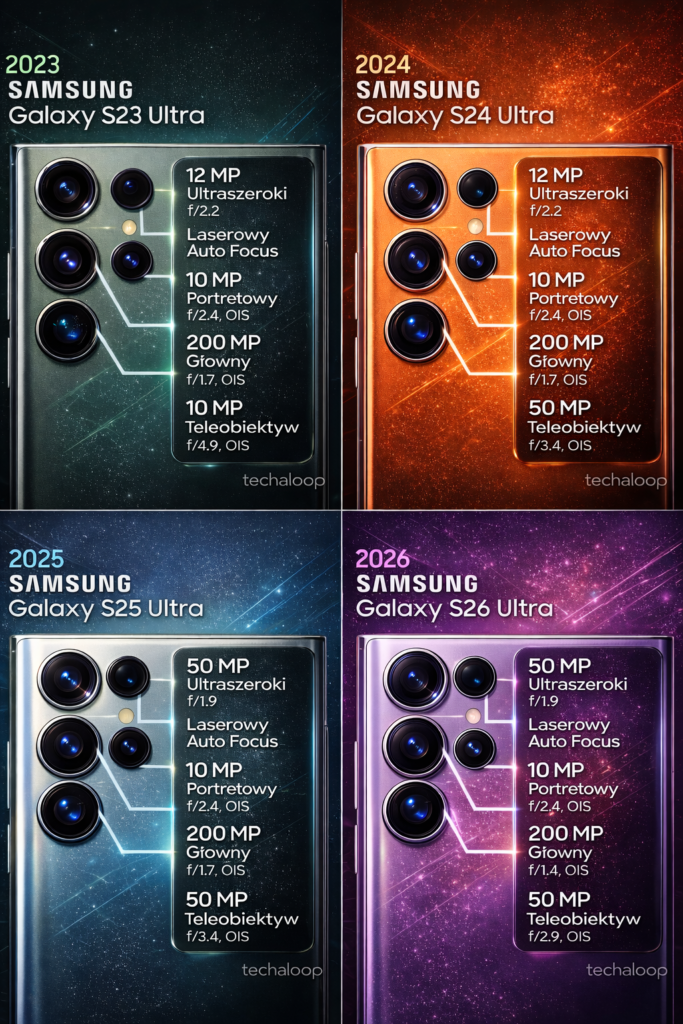
The journey begins with the acclaimed S23 Ultra. It established the benchmark for high-resolution mobile photography. Specifically, the device features a massive 200MP Main sensor with an f/1.7 aperture. Additionally, it utilizes a 12MP Ultrawide lens (f/2.2) and dual telephoto lenses. Consequently, users gain exceptional versatility in various lighting conditions.
Subsequently, the 2024 S24 Ultra refines this formula. The primary change lies in the zoom capabilities. Samsung introduced a new 50MP Telephoto lens with an f/3.4 aperture. As a result, long-range photography sees a significant boost in clarity. This device maintains the 200MP main sensor, ensuring continuity in core image quality.
Future Innovations: S25 and S26 Ultra Projections
Looking ahead, the S25 Ultra aims for greater uniformity across its lens array. Industry reports confirm substantial upgrades. For instance, the device will likely feature a 50MP Ultrawide sensor at f/1.9. Moreover, the 50MP Telephoto setup remains, creating a high-resolution experience across all focal lengths. This aligns with the broader trends in Consumer Tech.
The roadmap extends to the 2026 S26 Ultra. Rumors indicate this model will keep the 200MP main sensor count. However, it will widen the aperture to f/1.4. This adjustment would drastically improve light intake. Furthermore, reports suggest an upgrade to the 3x telephoto lens, moving to a faster laser autofocus system.
Visualizing the Hardware Evolution
Understanding these specs requires precise visualization. Modern design trends emphasize hyper-realistic 3D renders. These visuals display textures like brushed metal and frosted glass with lifelike accuracy. Consequently, the camera modules depicted in our analysis match the official specifications perfectly.
For example, the large 200MP lens requires a specific physical footprint. Renderings must reflect the f/1.7 aperture size accurately. Additionally, dynamic backgrounds enhance these technical displays. Themes involving nebulae or neon grids suggest advanced materials and Future Tech capabilities. High contrast between the text and the futuristic backdrops ensures readability.
Summary of Specifications
To summarize the Samsung Galaxy S Ultra camera specs comparison, the progression is clear. The S23 laid the groundwork. The S24 optimized the zoom. Subsequently, the S25 and S26 focus on resolution uniformity and light sensitivity. This evolution solidifies Samsung’s dominance in the Mobile and App Ecosystems.
For further verification of these technical details, consult authoritative sources like Samsung Newsroom, technical breakdowns on GSMArena, or industry analysis from The Verge.