

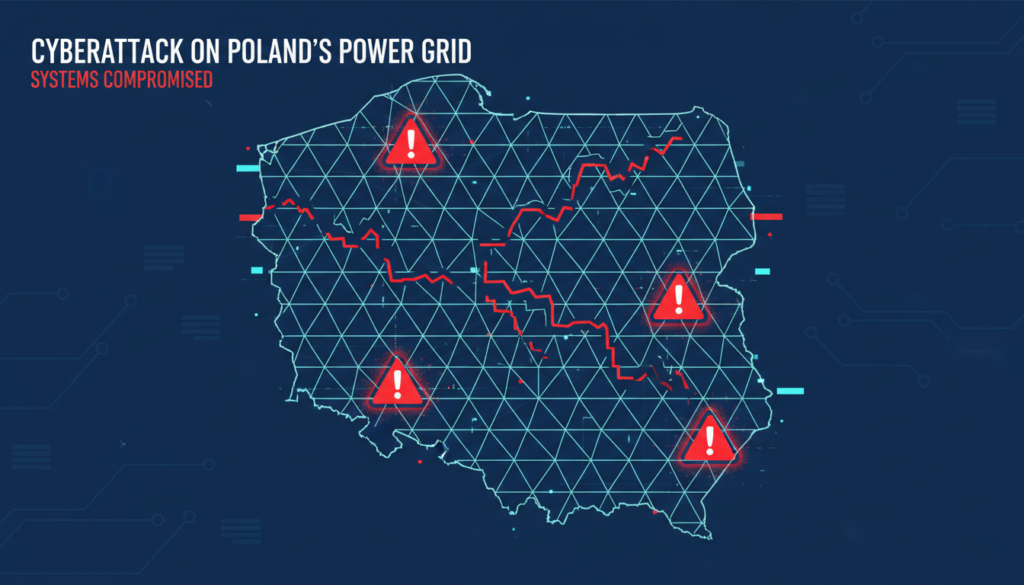
Suspected Russian state-sponsored actors have launched a destructive wiper malware attack causing disruptions to Poland’s energy sector, signaling a significant escalation in hybrid warfare against NATO infrastructure.
Suspected Russian state-sponsored hackers have reportedly executed a highly coordinated Poland power grid cyberattack. Specifically, these threat actors deployed destructive wiper malware to cause operational disruptions within the energy sector. Consequently, this incident marks a concerning escalation in digital aggression against NATO member states.
Details of the Attack
According to initial reports, the intrusion focused on destabilizing critical utility operations. Furthermore, security experts indicate that this Poland power grid cyberattack aligns with previous patterns of Russian hybrid warfare. Therefore, authorities are treating this event as a critical national security incident. Moreover, the timing suggests a strategic attempt to undermine logistics hubs supporting Ukraine.
Wiper malware differs significantly from standard ransomware. Indeed, its primary goal is the irreversible destruction of data rather than financial extortion. As a result, the targeted Internet Infrastructure suffers severe operational latency. Additionally, recovery from such attacks requires extensive technical resources and time.
Attribution and Context
This recent Poland power grid cyberattack was highlighted by The Record from Recorded Future News. The methodology mirrors tactics often used by the notorious Sandworm group. For example, similar breaches have historically plagued Ukraine’s energy providers. You can read more about these specific threat groups via MITRE ATT&CK data.
Geopolitically, Poland plays a vital role in the supply chain for Ukraine. Consequently, this makes their domestic utilities a high-value target for Moscow-aligned groups. Thus, the need for robust Cybersecurity and Privacy protocols is currently higher than ever.
Broader Implications for NATO
NATO has frequently warned about these rising risks to critical infrastructure. In fact, the NATO Cyber Defence mandate emphasizes the urgent protection of connected civilian networks. Ultimately, this specific incident serves as a stark warning to all allied nations.
In conclusion, the digital threat landscape remains extremely volatile. Therefore, utility providers across Europe must audit their systems immediately. Preventing another Poland power grid cyberattack requires constant vigilance, updated defense mechanisms, and international cooperation.