
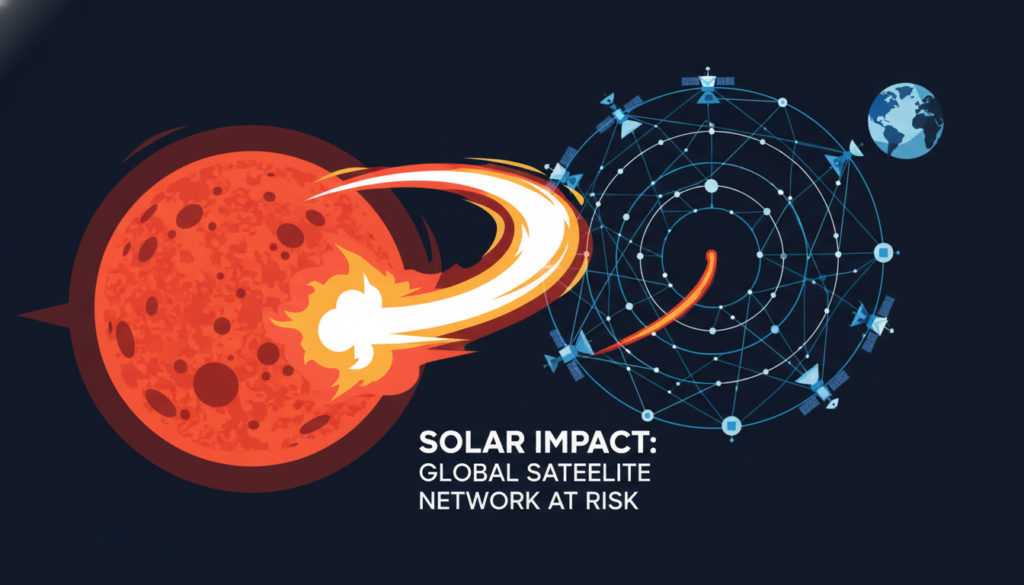
NASA’s Solar Dynamics Observatory detected a massive X4.2 solar flare on February 4, 2026. This high-intensity eruption poses immediate risks to global satellite infrastructure, radio communications, and high-tech monitoring systems.
The Sun remains a dynamic and tempestuous entity in our solar system. Consequently, it constantly undergoes processes that trigger far-reaching effects on Earth. On February 4, 2026, the star once again reminded humanity of its sheer power. NASA’s Solar Dynamics Observatory (SDO) witnessed a monumental event. Specifically, they detected a massive X4.2 solar flare impact erupting from the surface.
This event ranks among the most powerful types of solar eruptions. As a result, it immediately prompted discussions about implications for our planet. Experts are now analyzing the risks to the technological landscape. Furthermore, the burgeoning space economy must prepare for potential fallout.
Understanding the Science Behind the Flare
Solar flares appear as intense bursts of radiation. They originate from the Sun’s surface, often near sunspots and magnetic field lines. Scientists classify them based on their X-ray flux output. Currently, X-class flares represent the most significant events. An X4.2 flare indicates an exceptionally strong energy release. Moreover, it is capable of causing noticeable effects on Earth.
When such a powerful flare occurs, it releases a torrent of energy. Electromagnetic radiation races towards Earth at the speed of light. Astonishingly, this energy reaches our planet in approximately eight minutes. Therefore, warning times for the initial impact remain incredibly short.
Risks to Communication and Navigation
Immediate concerns following an X-class flare revolve around space weather. High-energy X-rays ionize Earth’s upper atmosphere. Consequently, this leads to sudden ionospheric disturbances (SIDs). These disturbances can cause significant disruptions to high-frequency (HF) radio communications. Aviation, maritime operations, and amateur radio enthusiasts often face the brunt of this interference.
Pilots flying polar routes are particularly susceptible to these blackouts. Beyond radio disruptions, the increased radiation poses a direct threat to hardware. Satellites are vital for GPS and modern Technology. However, they can experience increased atmospheric drag during these events. In severe cases, sensitive electronics may suffer permanent damage.
The Threat to Spacecraft and Astronauts
Astronauts aboard the International Space Station face elevated risks. Future lunar or Martian missions must also account for these solar tantrums. Therefore, mission control must implement protective measures immediately. While Earth’s magnetic field offers substantial protection, it is not impenetrable. A powerful X4.2 solar flare impact can push through these defenses.
This is especially true at higher altitudes. Satellites monitoring Internet Infrastructure are on high alert. Operators may need to put spacecraft into safe mode. This helps prevent data corruption or electrical failure. Subsequently, service providers prepare for potential outages.
Monitoring the Celestial Forces
NASA’s SDO plays a crucial role in this monitoring ecosystem. Additionally, the European Space Agency (ESA) collaborates on missions like SOHO. These observatories provide near real-time data on solar activity. They track coronal mass ejections (CMEs) and other space weather phenomena. This constant vigilance is vital for modern society.
Scientists use this data to understand the Sun-Earth connection. Consequently, they provide early warnings to industries. Agencies relying on Space Tech depend on these accurate forecasts. Without them, our modern digital life would be far more vulnerable.
Preparing for Future Solar Events
An X4.2 flare is undeniably a serious event. However, it also serves as a critical reminder. We need continued investment in space weather research. Furthermore, prediction models require constant refinement. As humanity ventures further into space, reliance on satellites grows.
Understanding solar activity remains a paramount challenge. The NOAA Space Weather Prediction Center continues to issue alerts. Ultimately, the February 4, 2026 event underscores a vital truth. We are locked in an ongoing dance with our star. Therefore, we must keep a watchful eye on the X4.2 solar flare impact and the forces that shape our existence.
For more details on solar cycles, visit NASA for official updates.