

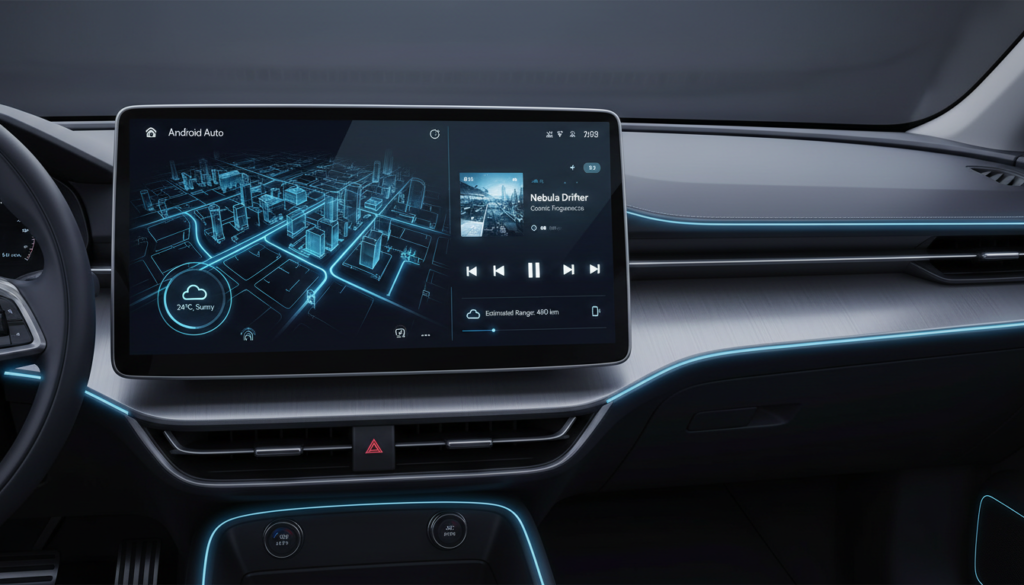
As Android Auto evolves, the focus shifts toward interactive widgets and AI integration. This analysis covers current compatibility, the 2026 roadmap for enhanced widget support, and what these changes mean for drivers and developers alike.
Android Auto has fundamentally transformed the in-vehicle experience. It seamlessly projects your smartphone’s interface onto your car’s dashboard. However, the demand for deeper customization continues to grow. Consequently, the conversation has shifted toward advanced Android Auto widget support 2026 capabilities. Users no longer want simple mirroring. Instead, they desire interactive, data-rich widgets that provide information at a glance. Therefore, Google is actively refining the platform to meet these modern expectations.
The Current State of Widgets and “Coolwalk”
Currently, true widget functionality remains somewhat limited. Google introduced the “Coolwalk” redesign to address multitasking needs. This interface splits the screen into cards. Thus, users can view maps and music simultaneously. Nevertheless, these are not fully interactive widgets in the traditional sense. They act more as static controls or display panels. Furthermore, third-party support is still catching up to first-party apps. As a result, the ecosystem feels restricted for power users.
For those interested in Consumer Tech, this evolution is critical. It bridges the gap between mobile flexibility and automotive safety standards.
Supported Cars: Who Gets the Update?
Fortunately, software updates largely determine Android Auto widget support 2026 availability. The car’s head unit acts primarily as a display. Therefore, most modern vehicles will support future widget updates without hardware changes. Compatibility currently extends to over 500 models.
Major Manufacturers with Support
- Ford: Sync 3 and Sync 4 systems generally perform well.
- Honda: Models from 2016 onwards offer robust connectivity.
- Toyota: Recent adoption of standard Android Auto ensures broad compatibility.
- Hyundai/Kia: Their widescreen displays utilize the split-screen feature effectively.
- BMW: Wireless Android Auto is standard in newer trims.
Essentially, if your car currently runs Android Auto, it should handle future software iterations. However, screen size does matter. Wider screens naturally display widgets more effectively than smaller units.
Looking ahead, the roadmap for 2026 is ambitious. Leaks regarding code-names like “Earth” suggest a complete home screen overhaul. Consequently, we expect to see resizeable, interactive widgets. These would allow drivers to control smart home devices directly from the dash. Moreover, recent beta versions hint at distinct “glanceable” zones. This would reduce the need to open full applications.
You can read more about the platform’s history on Wikipedia. This context highlights how far the interface has come since its inception.
The most significant shift involves Artificial Intelligence. Google plans to integrate Gemini deeply into the automotive ecosystem. Subsequently, widgets will become predictive rather than just reactive. For instance, a calendar widget might automatically suggest navigation routes based on email context. Additionally, AI could summarize group chats into a fleeting widget notification. This ensures drivers stay informed without taking their eyes off the road.
Reports on Google’s official blog often discuss these AI advancements. They emphasize safety and contextual awareness above all else.
Implications for Drivers and Developers
This shift matters significantly for two groups. First, drivers gain a safer, more intuitive cockpit. Android Auto widget support 2026 aims to minimize screen interactions. Consequently, distraction levels decrease. Second, developers gain a new canvas. The Mobile and App Ecosystems are expanding into the dashboard. Therefore, apps like Spotify, Zoom, and WhatsApp can offer richer, safer experiences.
Moreover, news outlets like 9to5Google frequently highlight these developer opportunities. They track the API changes that allow for this new functionality.
The future of in-car technology is bright. By 2026, Android Auto will likely look very different. It will move from a phone mirror to a smart, predictive assistant. Thus, keeping your phone and car firmware updated is essential. Ultimately, the goal is a seamless blend of digital life and the open road.














1 thought on “Android Auto Widget Support 2026: Future Features & Car Compatibility”
Pingback: Leaked: Google Is Secretly Testing Android Auto Home Screen Widgets | Techaloop | Stay in the Loop | Lead the Future.